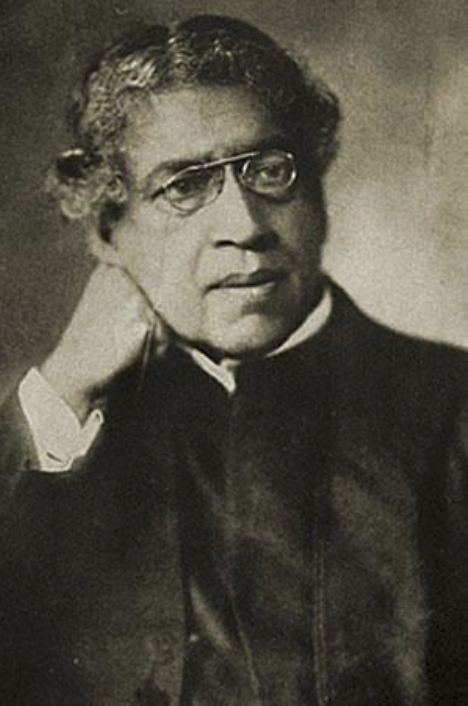
Jagadis Chandra Bose- started his career as a brilliant physicist, changed his discipline to become an even more influential plant physiologist, and died a lapsed scientist and half forgotten mystic. In his heyday, his admirers such as Albert Einstein, Bernard Shaw, Henri Bergson, Aldous Huxley, and Romain Rolland found in him the personification of a historical civilization which had a more humane concept of science and a more integrated view of the organic and inorganic worlds. Even when he had fallen from grace in the world of science, his countrymen continued to see in him a symbol of “Indian science” and a pioneer who had Indianized modern science to make it compatible with the culture of an ancient society. The essay traces Bose’s science to his early socialization, the distinctive concept of science in his society, and the needs of modern science at his time. It also shows how his professional degeneration reflected the interactive demands of his subject society, his personality, and the apparently universal culture of world science dominated by societies which in the context of India aroused deep feelings of personal inadequacy and a painful search for parity.
Bose never felt that his innovations in scientific culture had any chance of survival without his success in formal science to back it up.He was not willing to accept himself as merely a creative philosopher of science. He had also to succeed as a scientist. A highly successful physicist and a remarkably innovative botanist, Bose also gave a special Indian perspective to world science, and was one of the first among modern scientists to enter interdisciplinary research in his field. He also worked out a philosophy of science which anticipated some of the major themes in the contemporary philosophy of science. Simultaneously, he was a savant and a missionary-scientist for many in the West, and a national hero in India. And yet, much of this was to prove ephemeral. Even in his lifetime, modern physics and botany started overtaking his ‘”Indian science”‘; today, within four decades of his death, his idiom sounds flat and outdated even in his own country. Though his memory survives among important sections of Indian intellectuals and popular versions of his life offer a significant role model to young Indian scientists, his scientific work has already been stripped of its past glamour, and his concept of Indian science only marginally enthuses professional scientists in India. Newer currents of social change have apparently thrown up newer self-definitions in the Indian scientific community.
 Science in India