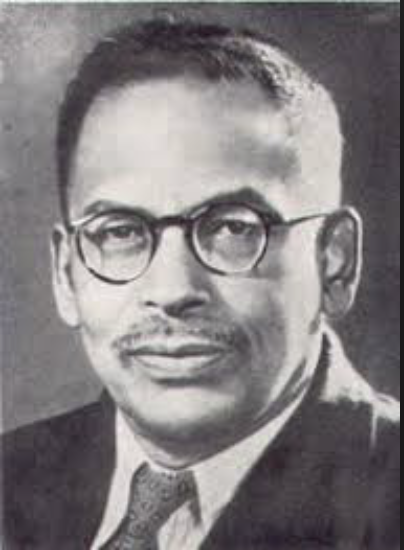
Meghnad Saha was an Indian astrophysicist famously known for his development of Thermal Ionization Equation, Which was further perfected by British astrophysicist Edward A. Milne. Saha was the scientist-architect of the planning and industrialisation model in independent India. Saha’s caricature of Gandhi’s views on science in important historically for the role he played in formulating the ideology of science policy in free India. Saha founded the Indian Science News Association at Calcutta in 1935. Its main objective was to disseminate science amongst the public. The Association started publishing its journal called Science and Culture.
On receiving, a copy of the first issue of the Journal, Netaji Subhash Chandra Bose wrote: “The appearance of Science and Culture is to be warmly welcomed not only by those, who are interested in abstract science but also by those who are concerned with nationbuilding in practice. Whatever might have been the views of our older “Nation builders” we younger folk approach the task of nation building in a thoroughly scientific spirit and we desire to be armed with all the knowledge which modern science and culture can afford us. It is not possible however, for political workers with their unending preoccupations to glean that knowledge themselves, it is therefore, for scientists and scientific investigators to come in their rescue.” Saha himself wrote more than 200 articles in Science and Culture on a wide range of topics which included: organization of scientific and industrial research, atomic energy and its industrial use, river valley development projects, planning the national economy, educational reforms and modification of Indian calendar. The journal is presently running in its 68th volume. Saha was an ardent and persistent advocate of large-scale scientific and industrial development of India. In 1938 he persuaded Subhas Chandra Bose, a prominent member of the Indian National Congress, to create a national committee to plan scientifically and systematically the national reconstruction of India. Saha was deeply concerned with the recurring disastrous floods in many Indian rivers. The extensive damage caused by floods in North Bengal in 1923 prompted Acharya Prafulla Chandra Ray to organize relief operation under the aegis of North Bengal Relief Committee. Ray was able to collect a large fund from the general public for the relief work and he was assisted by Subhash Chandra Bose, Meghnad Saha and Satish Chandra Dasgupta. And it was while carrying out the relief work Saha got a first hand experience of the devastating power of floods. Saha wrote about his experience in newspapers and magazines. In his Presidential address to the Indian Science Congress in Mumbai in 1934 he drew specific attention to serious problems caused by floods. He also emphasized the need for a River Research Laboratory. Again in 1938, in his presidential address to the National Institute of Sciences of India he highlighted the danger posed by recurrent floods in Indian rivers particularly in the deltaic ones. In 1943 the flood in Bengal isolated Kolkata from rest of India and Saha wrote extensively on the issue. Saha’s writings and speeches made the government realize the gravity of the situation. As a result the Damodar Valley Enquiry Committee came into being in 1943. The Committee was chaired by the Maharaja of Burdwan. Saha was also a member of the Committee. Saha presented a plan for handling the Damodar river system before the Committee. He also wrote extensively on river control based on modern science and technology. He argued that the model of Tennessee river system under the Tennessee Valley Authority (TVA) in USA could be adapted to the Damodar Valley. At the instance of Dr. B. R. Ambedkar, the then member-in-charge of power and works in the Viceroy’s cabinet, the Government adopted a resolution to set up a Damodar Valley Corporation (DVC) after the model of TVA. The DVC was set up in March 1948. Saha’s interest was not confined to Bengal rivers alone.
https://physicstoday.scitation.org/doi/pdf/10.1063/PT.3.3267
Sur, Abha. “Scientism and Social Justice: Meghnad Saha’s Critique of the State of Science in India.” Historical Studies in the Physical and Biological Sciences, vol. 33, no. 1, 2002, pp. 87–105. JSTOR, JSTOR, http://www.jstor.org/stable/10.1525/hsps.2002.33.1.87.
 Science in India